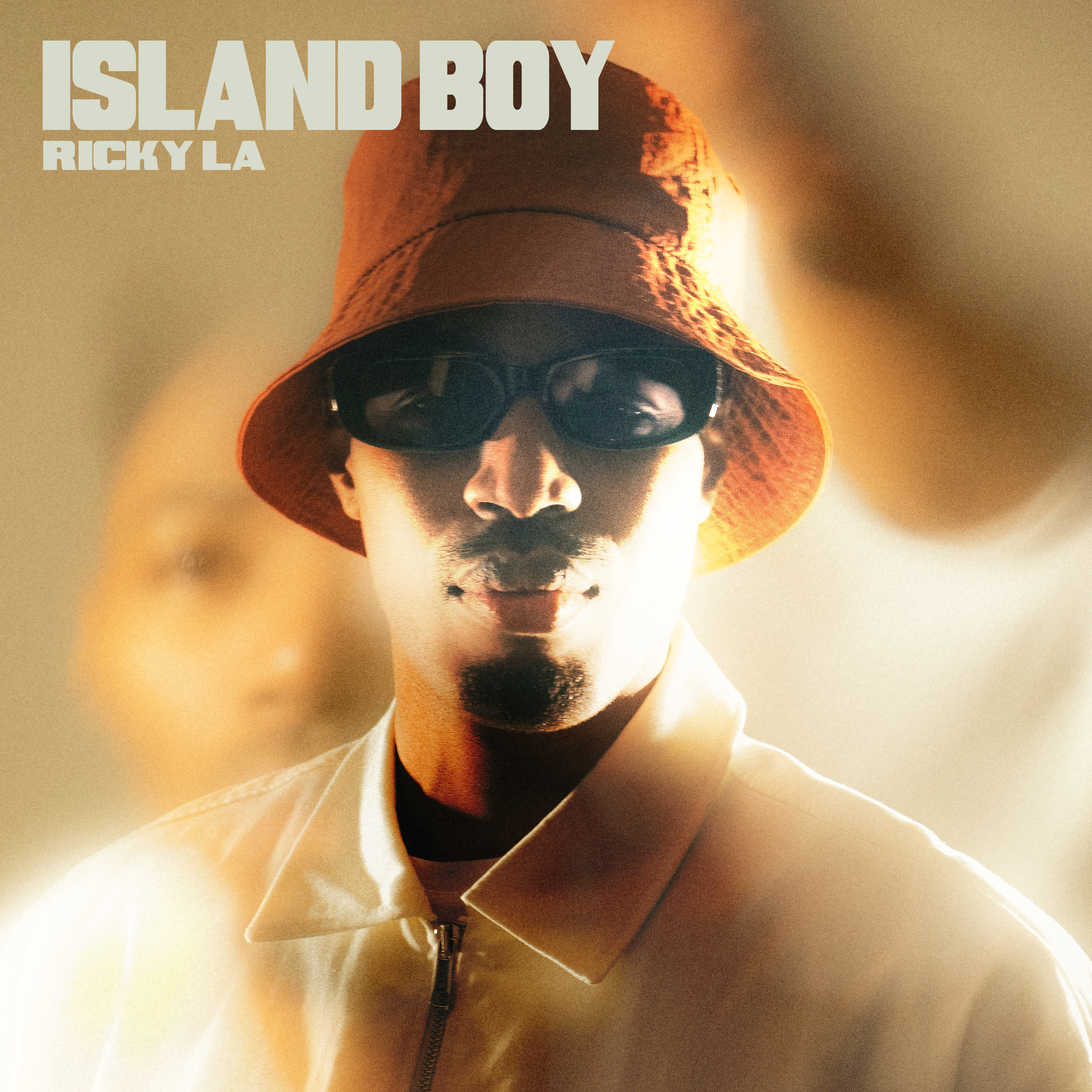
An Interview With Island Boy Ricky LA

Prague-based musician and songwriter Ricky LA is kicking off his music career with the release of his debut EP called Island Boy. I was eager to learn more about his music and creative process, so I invited him for a chat. We met at Naplavka, a popular hangout along the river in Prague.

It was a classic autumn day and, you could feel winter slowly taking over. The sun was shining bright, and this created the perfect setting for an outdoor interview. We grabbed a coffee, found a quiet spot, and started our conversation.

I can see that you are passionate about what you do. Also, your music reflects your positive view on life. I’m curious, what got you into music and who or what influenced and inspired you?

It was my parents who introduced me to music. My dad was playing bass guitar in a band. He taught me how to play the guitar when I was young, and everything started from there. My mum was really into listening to music, mainly American music, and that shaped my interest. When I was given the guitar, I tried to play some chords, and I didn’t like it to be honest. It was part of the education for me. But over the years, I became to love to play the guitar. I mainly enjoyed playing together with other people. Then I said, okay, let’s try to go a bit further and so I did. So yeah, it was my parents who had an important influence on me.

You grew up in quite an isolated place, Réunion Island. I trust there was an interesting local music scene. Were there any specific musicians you were listening to back then, or any music genres that stand out for you?

I listen to a lot of music, and weirdly, I rarely listened to famous or commercial artists. I investigate a lot in finding new artists, mainly music available on YouTube that was posted by the artists themselves. Most of them have around 100 views but, I can feel they have good vibes. The genre can include everything. My roots are connected with soul and jazz music, and with a focus on vocals. The music I listen to today is depending on the moment, like for example in this season, autumn, I’m listening to a lot of jazz music.

It’s important to know that I’m from Réunion Island which is a French department and there we listen a lot to reggae and dancehall. The music there is exotic, tropical, and dynamic. I am influenced by a lot of different music and I try to put all this in my sound and in my projects.

Are there still elements in your music that are directly related to your birthplace, Réunion Island?

I want the music I make to be different. Music in Réunion Island, for example jazz, is often combined with the traditional music called Maloya. A tradition that has been passed on for generations. The music is absolutely in my blood, but I want to be the guy doing something different. I want people to think “where is this guy from?” with the answer to be “he is from here, but singing in English and making a new kind of music”. Traditionally, I should be singing in French or in Creole but I don’t. I hope in one of my future projects I can use my native language but for the start of my music career, I just want to be different.

You said earlier you have a connection with soul music. In your song “You” I feel a bit the Motown sounds from the 1980s, especially in the background beat of the refrain. Does the soul music from Detroit inspire you?

What is interesting in the song “You” is this funky vibe. The best part of the song is the baseline. The baseline can be considered old fashion. If I have to describe my music, it is a new wave of soul. We took the basics in the old fashion way, and then we added something new to it which creates an interesting vibe.

You are now living and making music in Prague, Czech Republic. I’m curious about how the city has an impact on your music. What are the benefits of living in Prague, and what is holding you back?

I am new to singing, I started about 3 years ago, and Prague is a great place to start when you are new to the music scene.

Prague is also slightly cheaper to launch a music career compared to other capital cities in Europe. If I would compare this to cities such as Berlin or London, I can say that Prague offers more possibilities for musicians who finance their careers themselves. Just so you understand, the cost of making and producing one song is high and it’s an investment you must make if you aspire to be a musician. Once the song is ready to be recorded and released, you must hire a sound engineer, rent the recording studio, pay supporting musicians, and in my case cover the costs of a music video production. This all adds up and the total sum can be considered less here. I’m also investing a lot in developing my vocal skills, I’m taking lessons with a singing coach to better support the needs of my music and so, bring it to the next level.

For the future, especially when I’ll start performing again, I can see a challenge. Perhaps Prague can be challenging when looking for opportunities to promote my music and to perform it live. There is a great scene with open-minded people that will appreciate my music, however, the scene is not so big compared to for example London. Performing at a different club every week might not be possible here but nevertheless, I’m going to take every opportunity that comes my way.

Could you describe your creative process? How do you start writing a new song, and how long does the process take?

I mentioned, I’m new and still learning. I don’t know all the techniques of how to create a song. But this creates creativity and I learn while doing it.

I always start with finding the musical idea, or hook, because it is something repetitive and it can define the vibe of the songs. I do this by looking for chord progressions on the guitar. Once I have the basic idea, I keep repeating it, keep experimenting, and keep improvising until I find the catchy riff for the song. Then I continue working on the verse and bridge. I also work with producers and together we create the beats and right bpm for the songs.

For the song “Holidays” I spent at least a month to have the track fully done.

What’s next for you in 2021? Anything you are looking forward to or any goals you set for yourself?

I want to further develop and make the music I’ve already created even better. 2020 was not an easy year, we could not record the way we wanted, and a lot of live performances were canceled. We were in a hurry to record my songs because the reserved studio time was being canceled as a result of the restrictions around the coronavirus. Also, my vocal lessons were canceled what limits me. I was not fully satisfied with the result, I can be honest about this.

In 2021, I will take my time, I’m currently writing some new songs that will be released during the year, and hopefully, for these songs, we will not be restricted. I also hope for more opportunities to connect with my fans as they expect me to perform. They want to know how I am behaving on stage as well. Live concerts are important to me, not only for promotional reasons, but they will help me become a better musician as I don’t have a lot of experience in it. It even scares me to be in front of people and sing my lines.

I released 3 tracks, and personally, I am the most pleased with “Holidays” (video). I want to do something even better with my next songs.

All music by Ricky LA is available on Spotify and you can follow him on social media:

Are you a musician and are you interested in being interviewed? Contact me

Old Folks at Home (Way Down Upon Swanee River)

One of my all-time favorite boogie-woogie piano songs is Swanee River Boogie performed by Albert Ammons And His Rhythm Kings. Ammons plays a steady and repeating boogie baseline with the left hand, accompanied by the adaptation of the melody from Old Folks at Home (also known as Swanee River) with the right hand.

Swanee River Boogie – Albert Ammons And His Rhythm Kings

Old Folks at Home was written by the American composer Stephen Collins Foster in 1851. The first publications of the work would credit Edwin P. Christy, who commissioned the work, but this was later corrected and Foster received full credit for his song.

Stephen Collins Foster, who was uneducated in music, learned to write music as a young boy using the singing of his sisters as the main source of creativity. The phrase ‘Swanee River‘ was added to the song out of a lack of inspiration. Foster wanted to name a river in his lyrics, and it was his brother who suggested the Suwannee River, a river that runs through south Georgia into Florida. To fit in the melody and dialect of the song, he used Swanee River instead. It’s interesting to know that Stephen Foster was born in Pennsylvania and he never set foot in Georgia or Florida, hence he never saw the Suwannee River.

Ernestine Schumann-Heink – Old Folks at Home recording from 1918

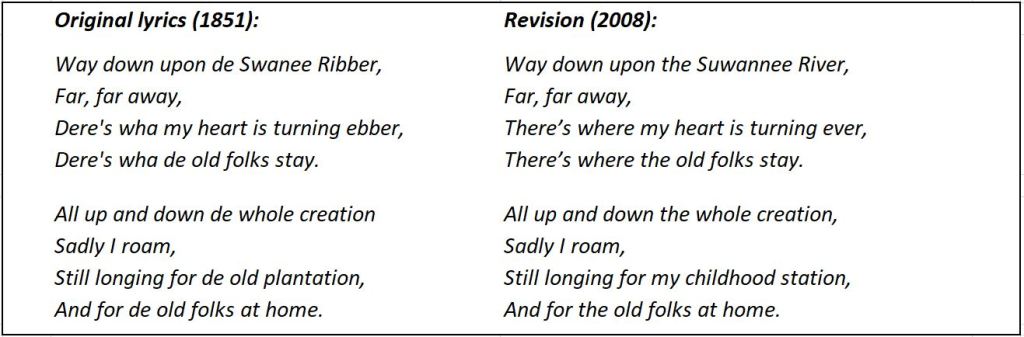
In 1935, the composition would become the official state song of Florida. However, the original lyrics were altered. The lyrics were written in an African American dialect and would contain references to slavery and plantations. The dialect was modified into “dictionary-English” and the song was renamed after the river’s official name, Suwannee river. Also, words such as “plantations” were removed to eliminate any reference to plantation work.

Part of the original lyrics versus the 2008 revision

Over time, many great versions of the song were recorded. The song survived all decades and was re-shaped each time a new genre emerged. The title would often be adjusted to have a better fit into the new genre it’s being played in (Swanee River boogie, Swanee River Hop, Swanee River Rock, etc.).

In the early years of the 20th century, the song was incorporated into the foxtrot, ragtime, and Dixieland scene of the south. Pianist Fletcher Henderson recorded his version called Swanee River Blues. The song is not played like a classic blues song but more in a march-like Dixieland rhythm.

The song gained a lot of popularity during the 1930s thanks to the swing era. Jimmie Lunceford and His Orchestra recorded a popular big band version. Remarkable was the Swanee river-melody is no longer exclusively played on the piano but different instruments were used. Also, Django Reinhardt et le Quintette du Hot Club de France (although he is a Belgian musician) recorded his version on the guitar, he’s supported on the violin by Stéphane Grappelli.

Belgian jazz guitarist, Django Reinhardt and le Quintette du Hot Club de France

Albert Ammons recorded his boogie-woogie piano version in 1946 together with His Rhythm Kings. He named the song Swanee River Boogie. The song was released at the peak of the genre. The success of boogie-woogie music in America was a direct result of the ‘From Spirituals to Swing’ concert. A concert that brought together the many forms of African American music that were developed over time, including boogie-woogie.

Boogie-woogie and blues music further evolved into jump-blues, rock-and-roll, and rhythm-and-blues and these genres would keep on covering Swanee River. Fats Domino released his version called Swanee River Hop, this version sounds a lot like Ammons’ boogie-woogie version. Even the legendary Ray Charles played the song and named it Swanee River Rock.

Even today musicians play their own interpretation of the song. Hugh Laurie released a very interesting modern version of the song in 2011. You can find it on the album Let Them Talk. Although the piano and vocal intro by Hugh Laurie gives you a boogie-woogie feel, the band is bringing an extra layer to the performance, the song now also has aspects of folk music and gypsy jazz.

Hugh Laurie’s performance of Swanee River in New Orleans

The Real Nitty Gritty – A Tribute to Shirley Ellis

This article is written in memory and honor of Shirley Elliston († October 5, 2005, New York City)

Shirley Ellis is one of the most exciting performers in the world of popular music today. This excitement, which has consistently captivated audience in the nation’s leading night clubs and concert appearances is immediately apparent as you listen to her recordings which have swept into the best-selling lists time after time.

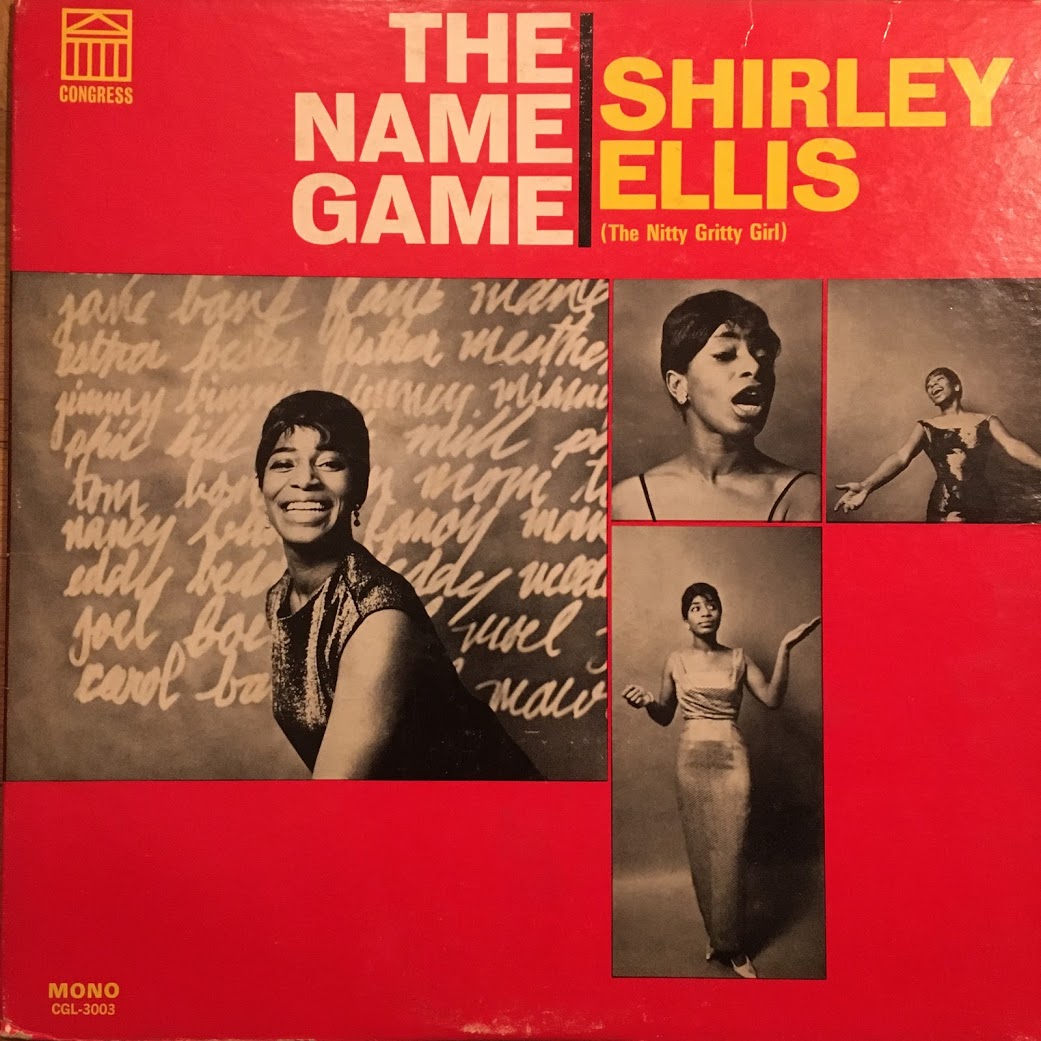
As written in 1965 on the back of her album ‘The Name Game’ (Congress CGL-3003)

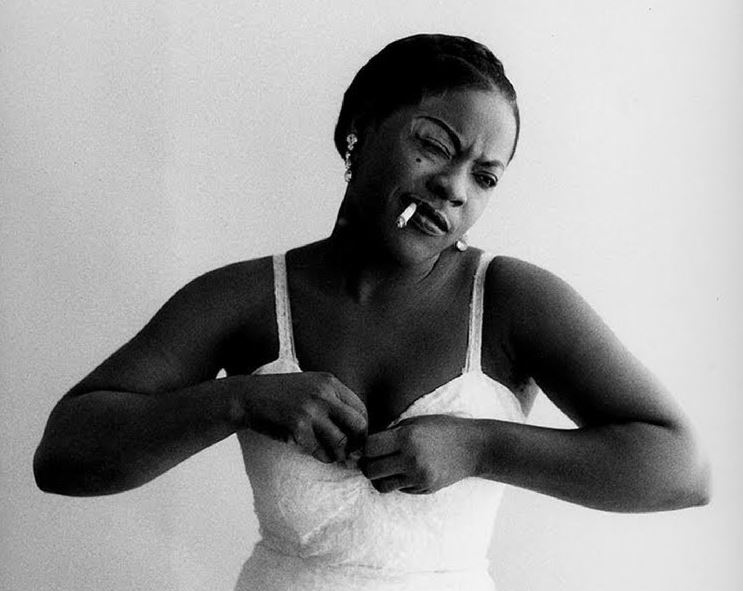
Shirley Ellis, born Shirley Marie O’Garra in 1929, was an American soul singer and songwriter who gained international fame during the 1960s. Although her active recording span was short, Shirley Ellis left us with many great songs before she retired from the music business in 1968. Songs such as ‘The Name Game’ and ‘The Nitty Gritty’ are an innovation for rhythm-and-blues and soul, while her hit ‘Soul Time’ became a true Northern Soul classic and filled the dance floor at many UK clubs during the late 1960s and 1970s.

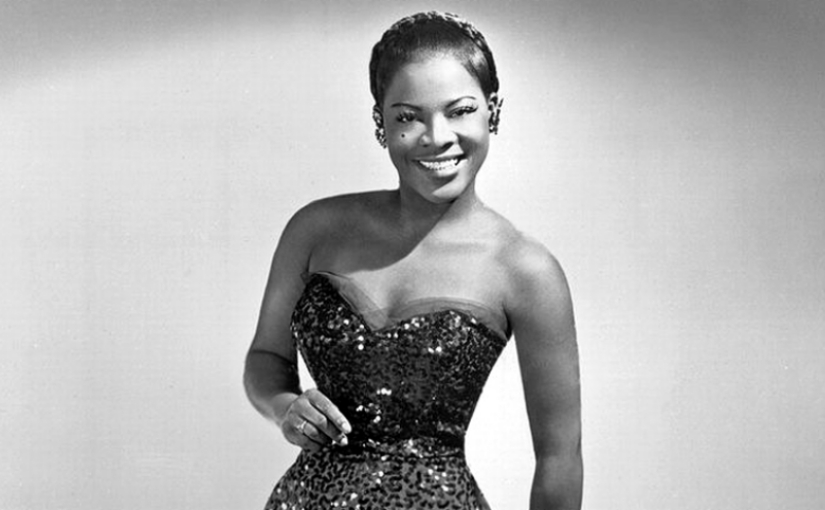
Portrait of Shirley Ellis

Initially, Shirley Ellis aspired to become a songwriter. She started her career by writing several songs for the doo-wop group The Chords. A milestone in her singing career was her participation in The Amateur Night At The Harlem Apollo Theatre in 1954. She won first prize and so, her name would be listed amongst other winners such as Louis Armstrong and Ella Fitzgerald (who was only 15 years old when she won). Five years later, in 1959, Shirley Ellis met Lincoln Chase. Lincoln Chase was a songwriter, producer, and manager who shared the same West Indian heritage as Shirley Ellis. He was already working closely together with Lavern Baker (Jim Dandy) during the 1960s and would use his experience to elevate the solo career of Shirley Ellis.

Shirley Ellis recorded and released her solo debut single on the label Shell in 1961. For this release, she used her official married name, Shirley Elliston. The single (Shell 45-307-V) includes the songs ‘Love Can Make You Know’ on the A-side, and ‘A Beautiful Love’ on the B-side. Both tracks have a more 1950s and 1960s pop-feel and are less compared with the rhythm-and-blues and soul sound she would record in the following years.

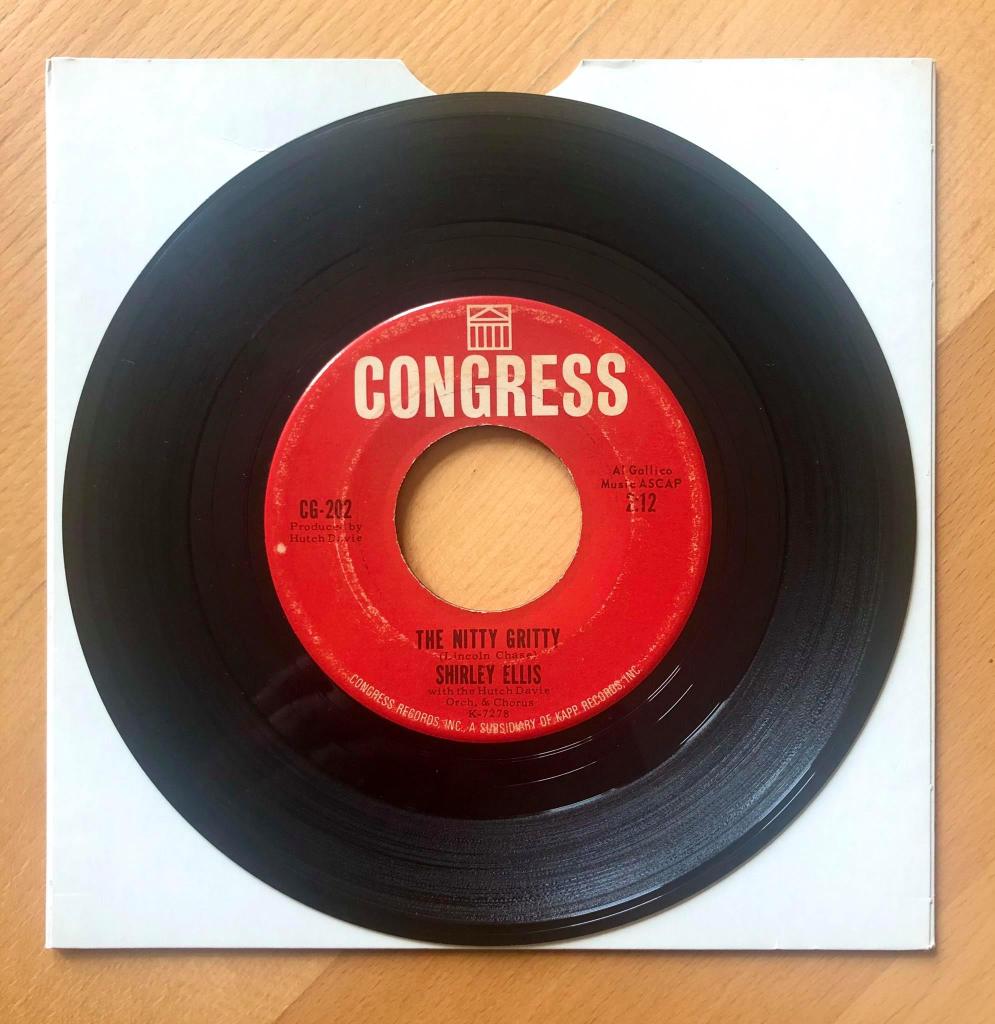
Two years after her debut, Shirley Ellis would make a second solo debut on the label Congress (part of the Kapp Records-family). She would record the novelty classic ‘The (Real) Nitty Gritty’ with the track ‘Give Me a List’ on the B-side of the 7-inch 45rmp recording. For the first batch of singles that were released, Shirley Ellis would still use her married name Shirley Elliston, and the songs’ title was ‘The (Real) Nitty Gritty’. For commercial reasons, Congress changed the name to Shirley Ellis and would shorten the title to ‘The Nitty Gritty’. For the release of this song, she would work closely together with Lincoln chase who wrote the songs, and Robert Bunyan (Hutch) Davie who produced the release.

According to the Cambridge Dictionary, nitty-gritty means the basic facts of a situation. And this is also the message Shirley Ellis (and songwriter Lincoln Chase) sent us in their song. She motivates us to get to the essentials, to be yourself, to be real, not to pretend but instead dance from the heart! You don’t need to be a performer when you’re getting’ on the dance floor. You dance for yourself and not for others. There is no competition in who has the better moves because everybody feels the music differently and moves to the rhythm in their own unique way. And even when you have perfection and your dance is advanced, there will always be a time you need to get back to the essentials. In her lyrics, she highlights that not everybody is aware of this and that even the most talented at some point need to learn how to get down to the fundamental elements. In the first part of the lyrics, she says that sooner or later there will be a short and simple song (a ditty) and that you’re going to have the get right down to the real nitty-gritty.

Some folks know about it, some don’t (some don’t)
Some will learn to shout it, some won’t (some won’t)
But sooner or later baby, here’s a ditty
Say you’re gonna have to get, right down (to the real nitty gritty)

Lyrics to ‘The Nitty Gritty’

And if that message wasn’t clear, she released a sequel song the following year called ‘(That’s) What The Nitty Gritty Is’. The record was first released as a promo in 1964 (KEV 13006) and was officially released in 1965 (CG-208). In this second version, Shirley Ellis would answer the question everybody was asking “What is the nitty-gritty?” and she replies with the simple answer that the nitty-gritty is anything you want it to be. She no longer limits her motivation to dance but explains it reflects also in the way you talk and sound. All your actions will at some point require you to revisit the essentials if you want to act from the heart.

Everybody’s asking what the nitty gritty
The nitty gritty’s anything you want it to be
Just stir it up from the soul
And when it starts to fizz
That’s what the nitty gritty is

Lyrics to ‘(That’s) What The Nitty Gritty Is
The Nitty Gritty by Shirley Ellis – 45rpm Original Second US Release (Congress CG-202, 1963) From My Collection

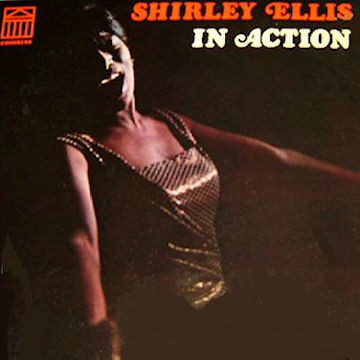
There is no doubt that the release of ‘The Nitty Gritty’ added a more rhythm-and-blues sound to her music and this would continue in the following years. In 1964, she would release the hits ‘Taking Care Of Business’ and ‘The Name Game’. Both songs were originally released on single and shortly after on the albums In Action (1964) and The Name Game (1965).

What became a true signature for her music was her ability to step outside the boundaries of standard pop music by provoking humor and commentary. Shirley Ellis often performed songs for the comic effect. Lyrics and rhythms could be compared with what children would rhyme and sing to each other while playing hand-clapping games on the playground. A good example of this are the lyrics and rhythm from her hit song ‘The Clapping Song’: “Three six nine, the goose drank wine. The monkey chew tobacco on the streetcar line. The line broke, the monkey got choked. And they all went to heaven in a little rowboat.” Performing songs in this rhythm allows a great emphasis on syncopation and Juba dance or hambone, an African American style of dance that contains stomping your legs and clapping the hands, arms, chest, and cheeks.

In Action (Congress CGL-3002, 1964) & The Name Game (Congress CGL-3003, 1965)
by Shirley Ellis – LP Studio Album Original US Release Mono

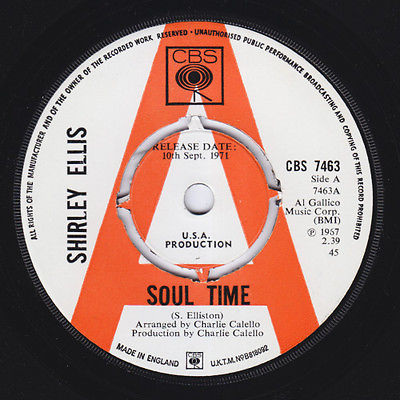
In 1966, Shirley Ellis released the Northern Soul classic ‘Soul Time’. The record was originally printed by Columbia Records in the US as a promo (Columbia ‎– 4-44021, white label) and was officially released shortly after (Columbia ‎– 4-44021, red label). This change in record company also came with a small drift in style.

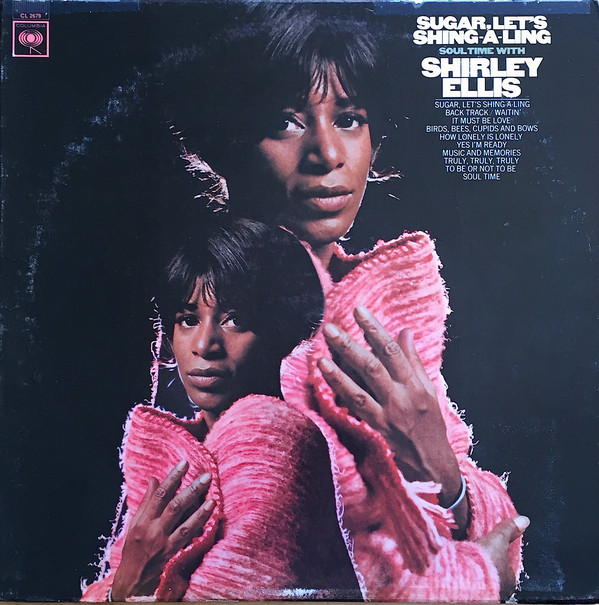
In 1967, Shirley Ellis released her third and final studio album called Sugar, Let’s Shing-A-Ling / Soul Time with Shirley Ellis featuring many great soul tracks including the hit ‘Soul Time’. This album is in my opinion in contrast with her previous two studio albums. The song selection is more focused on the progressive soul and funk music that was surfacing in Detroit, Chicago, and New York City. At the same time, her sound cannot be compared to Motown because Shirley Ellis sounds and sings differently. Shirley Ellis has a unique way of bringing music that was innovative and her own.

Sugar, Let’s Shing-A-Ling (Columbia CL 2679) LP Studio Album Original US Release Mono & 45rpm Promo of ‘Soul Time’ (CBS 7463) UK, 1971, by Shirley Ellis

Shirley Ellis retired from the music business in 1968 and although her active years as a singer where short, she had a major impact on the music of the 1960s. She appeared in several television shows, her songs were featured in movies, and many artists covered her work after her retirement (e.g. Gladys Knight and The Pipps’ 1969 version of The Nitty Gritty).

Performance of The Nitty Gritty dance routine by Chandrae & Stephen

Jim Dandy To The Rescue

With a recognizable drum intro from David Albert ‘Panama’ Francis, and with guidance on the tenor sax by Sam ‘The Man’ Taylor, LaVern Baker hit the charts in 1956 with the song ‘Jim Dandy’. The song would later take number 325 on Rolling Stone Magazine’s list of The 500 Greatest Songs of All Time.

LaVern Baker recorded many great rhythm-and-blues songs during the 1950s and 1960s. Her single debut for Atlantic Records was in 1953 with the song ‘Soul On Fire‘ and the following year, she would record the major rhythm-and-blues hits ‘Tweedle Dee‘ and ‘Bop-Ting-A-Ling‘. Baker, born Delores Williams, recorded already before signing with Atlantic Records. This was under different pseudonyms. In 1951, she recorded on RCA Records under the stage-name Little Miss Sharecropper, and in 1952, she signed with Okeh Records and started using the name Bea Baker. Her big breakthrough as a singer was with Atlantic Records so the name, LaVern Baker, was kept.

We can hear the soul, the spirit, and the sense of humor in her art.”

Chaka Khan
LaVern Baker

In the 1950s, it was usual for white musicians to copy or imitate the creative work of black artists. Those copies would sell often better with the white audience and many record companies used this as a sale strategy. Ahmet Ertegun, the co-founder of Atlantic Records, said: “when Radio stations had the choice between the black original and the white copy, they would always play the copy”. Baker’s hit ‘Tweedle Dee‘ was covered by Georgia Gibbs, the cover became more popular and sold much better. Apart from quality and musicality, it succeeded Baker’s original. LaVern Baker was not a big fan of this practice, it made her upset and she considered it stealing. As a sarcastic joke, Baker named Gibbs beneficiary on her flight life insurance. When she would go on a big tour, and not record any new songs, she mailed the insurance documents to Gibbs with the message: “Since I’ll be away and you won’t have anything new to copy, you might as well take this.”

Baker took satisfaction in knowing that when Gibbs covered her song ‘Tra, La, La“, she didn’t pay attention to the song on the record’s other side, ‘Jim Dandy‘. This song would become and major hit and remained untouched by Georgia Gibbs.

Songwriter Lincoln Chase, who wrote ‘The Nitty Gritty‘ for soul legend Shirley Ellis, was the creative figure behind the song ‘Jim Dandy (To The Rescue)‘. He wrote the lyrics to the song that was recorded by LaVern Baker in 1956.

I was sitting on a mountain top. 30,000 feet to drop. Tied me on a runaway horse Uh huh, that’s right, of course. Jim Dandy to the rescue! Go, Jim Dandy!” describes one of the multiple situations where Jim Dandy would save a woman in distress. In the song, Jim Dandy refers to a man who rescues women from difficult, unpleasant, and sometimes dangerous situations. A real hero you can say. The dictionary defines ‘Jim-Dandy‘ as something very pleasant or something of excellent quality (e.g. that new album you bought is a real Jim-Dandy). Now as in many great rhythm-and-blues songs, the lyrics contain a great deal of humor and sarcasm.

Thanks to its success a sequel came out in 1957. Again written by Lincoln Chase, recorded by LaVern Baker, and released by Atlantic Records. The song describes a humorous cliche of a hero falling in love with the girl he just saved; “Jim Dandy rescued May, Fell in love with her the very same day, Got engaged that afternoon. Left that night on his honeymoon“.

‘Jim Dandy’ by LaVern Baker (Atlantic reissue from my collection)

Work with Me, Annie

Don’t be ‘shamed“, “Call my name“, “Oh, our hot lips kissing, Girl, I’ll beg mercy, Oh, hugging and more teasing, Don’t want no freezing” are fragments of the original song lyrics. Although the title ‘Work With Me, Annie’ is a double entendre, the lyrics don’t lie.

Work With Me, Annie‘ came from the creative hand of Hank Ballard, and together with The Midnighters, he recorded the song for Federal Records in 1954. The content of the song was considered too sexual in its time and as a result, there was a ban on playing it at the radio stations. Because of its great rhythm, influenced by the mid-era doo-wop sound, the song became an instant rhythm-and-blues hit. Although it was banned from broadcasting, it spread like wildfire.

In rhythm-and-blues, it was common for artists to record so-called ‘answer songs’. What it means is that another artist, and most commonly from the opposite gender, would record a response to the song. This response could be a sarcastic comment to acclaim the original. This is what Etta James did a year after the song ‘Work With Me, Annie‘ hit the charts. She recorded ‘The Wallflower‘ and replaced “Work With Me Annie” with “Roll With Me, Henry“. The song was written by Etta James with the help of her friend Johnny Otis, and Hank Ballard. To avoid censorship upon its release, they titled the song ‘The Wallflower‘ instead of ‘Roll with Me, Henry‘. Do me a favor and listen to both songs while comparing the lyrics.

In the 1950s, it was usual for big record labels, such as Mercury, to copy the original rhythm-and-blues songs from black artists, with white musicians. This was done because of commercial politics. Those records would sell often better with the white audience. They would keep the original rhythm and music but clean-up the lyrics. In 1955 Georgia Gibbs recorded a cleaned-up version of the song called ‘Dance With Me, Henry‘. Her version became the most played one in jukeboxes and radio stations. This is not to be considered a response song but, a commercial adaptation.

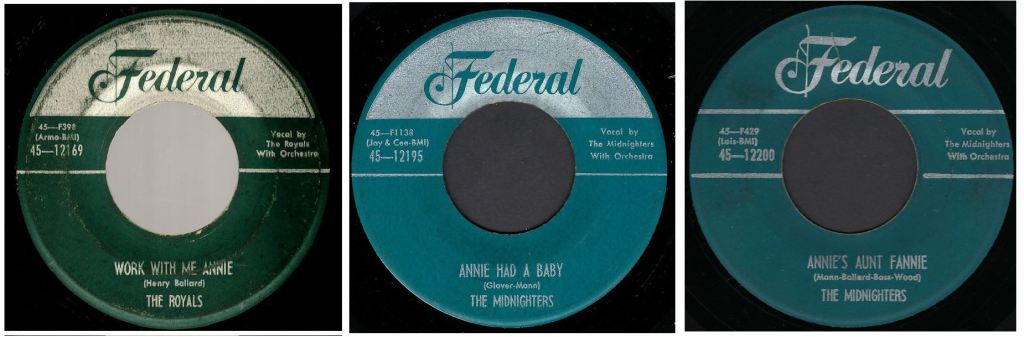
Shortly after the release of the original song by Hank Ballard & the Midnighters, an LA-based deejay joked about the aftermath of Annie’s unprotected adventures. Federal Records followed-up on this and a couple of months after the release of ‘Work With Me, Annie‘, Hank Ballard & the Midnighters recorded the sequel ‘Annie Had A Baby‘. The writing credits go to Henry Glover. The lyrics are short and simple but they contain a great amount of humor when placing them next to the lyrics of ‘Work With Me, Annie‘.

As in movies and a lot of other things, 3 is better. That same year, 1954, Hank Ballard & The Midnighters recorded ‘Annie’s Aunt Fannie‘. I didn’t come by upon much information regarding the history of the recording but, after analyzing the lyrics, I can conclude that also this song follows the same path. “I sent her to the store for candy. But she came right back so dandy. Before I could cuddle with my Annie.” are just a part of the full lyrics which are filled with humor and sexual content.

The ‘Annie’-recordings by Hank Ballard & The Midnighters (1954, Federal Records)

I’ve got all copies of the songs mentioned in my collection, with the exception of Georgia Gibbs, as I consider them masterpieces in its genre. Influenced by mid-era doo-wop and being rhythm-and-blues classics, they were a great deal of inspiration for the music that would erect in the following decades.

Shake, Rattle, & Roll

It was the co-founder of Atlantic Records, Ahmet Ertegun, who approached Jesse Stone with the question to write an up-tempo 12-bar blues song for Big Joe Turner. Little did he know that the song to be produced would be listed at number 127 on the Rolling Stone magazine’s list of The 500 Greatest Songs of All Time.

American rhythm-and-blues songwriter, Jesse Albert Stone, started his music career in 1926 when he formed The Blue Serenades. In the late 1930s, Stone would become a bandleader in the Apollo Theatre. There, he gained his credits as a songwriter while working with musicians such as Chick Webb, Louis Jordan, and Jimmie Lunceford. In 1947 he was officially employed by Atlantic Records as a producer and songwriter. Stone would push the direction of the new record label into a more ‘rhythmical’ rhythm-and-blues sound.

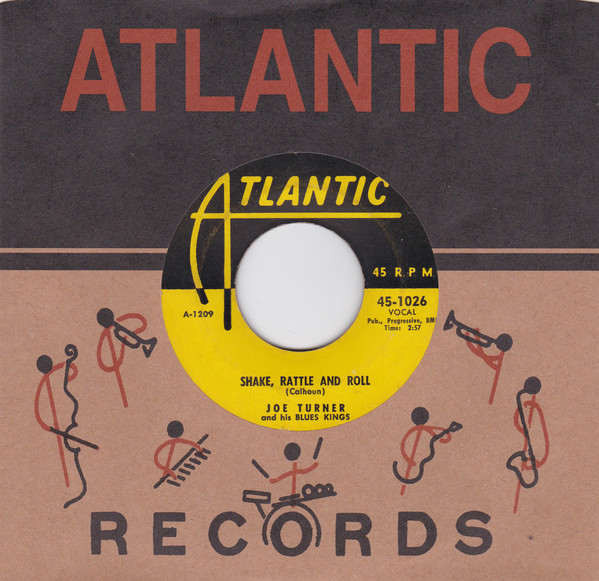
The most famous song from his hand is ‘Shake, Rattle, & Roll‘. The original recording of the song was by the American rhythm-and-blues legend, Big Joe Turner, on February 15, 1954. For work relating to Atlantic Records, Stone would use the pseudonym Charles E. Calhoun (as shown on the label below) to avoid copyright conflicts. The song recorded by Joe Turner is referred to as one of the earliest rock-and-roll recordings made. Although the original lyrics of the song would say one thing, their true meaning was different. Certain parts of the song were considered to be sexual, even too vulgar for jukeboxes in cafes. The song had to be cleaned up before recording and radio broadcasting. The original lyrics, as intended by Jesse Stone, were never published or recorded in the studio.

Original 45 rpm release of ‘Shake, Rattle, And Roll’ by Joe Turner And His Blues Kings

The song was covered by many artists, including Elvis Presley, during the 1950s and 1960s. In the same year of Turner’s recording (1954), Bill Haley And His Comets made their version of the song. Their adaptation was released on Decca Records and the lyrics were even cleaner. For example, the first line of the song “Get outta that bed, wash your face and hands” would be revised to “Get out from that kitchen and rattle those pots and pans“. Although Haley would use the more original lyrics during live performances to acknowledge Turner, Big Joe Turner would use Haley’s version for live TV broadcasts.

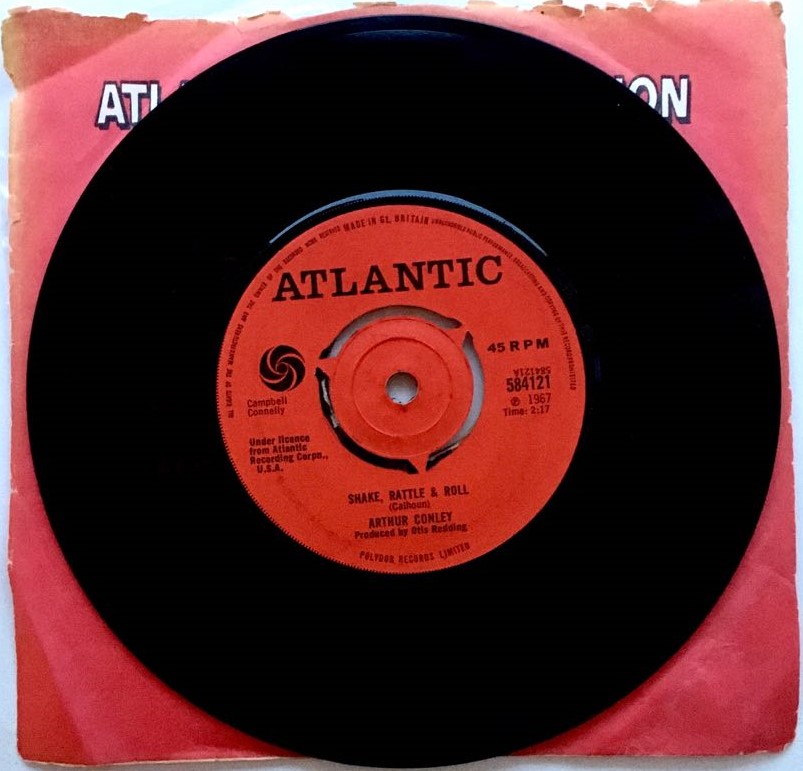
One of the versions from my collection is by soul singer Arthur Lee Conley. His version was recorded more than a decade later and the musical development of soul music is clearly present in his recording of the song. The background music and vocals are clearly indicating the late 1960s and the song has a less rock-and-roll feeling. Another great version is the one by Sam Cooke, who brought a more gospel feeling into the song.

Shake, Rattle, And Roll by Arthur Conley – 45 rpm from my personal collection