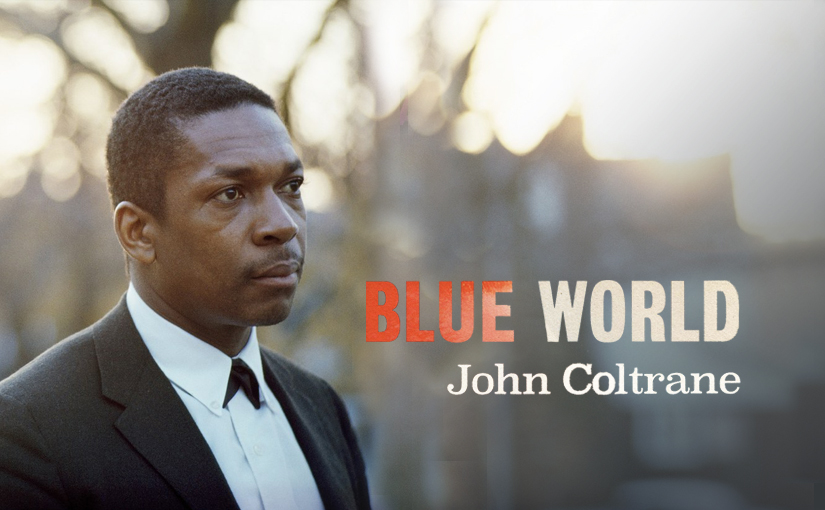
John Coltrane’s Blue World

By 1964 saxophonist John Coltrane was one of the leading figures in jazz music. Mainly, thanks to his release of Giant Steps in 1960. Officially, he recorded and released two albums that year: the often-overlooked album Crescent, and the well-known masterpiece A Love Supreme. With the recent release of his recording Blue World, we can add a third “album” to the list.

Blue World, recorded in the Rudy Van Gelder Studio on June 24 (1964), is a composition for the movie: Le Chat Dans Le Sac (Gilles Groulx, 1964). The soundtrack was fully composed by John Coltrane. For the recording, he invited his classic 1960s quartet featuring McCoy Tyner on the piano, Jimmy Garrison on the bass, and Elvin Jones behind the drums. It was also with these musicians that he recorded Crescent (April/June 1964) and A Love Supreme (December 1964).

For every admirer of the saxophonist, composer, and bandleader, this release is very welcome. It gives another insight into the confidence Coltrane and his band had that year.

The album features two alternate takes on the song “Naima“, a ballad he composed for his wife Juanita Naima Grubbs (married 1955-66) in 1959 and which was originally released on the album Giant Steps. Also notable are the three takes on his composition “Village Blues“, a song that was originally released on the studio album Coltrane Jazz with Steve Davis on the bass. The Blue World recordings would feature Jimmy Garrison who replaced Steve Davis in 1961.

After Le Chat Dans Le Sac was put online for streaming, the search for the original recording tapes began. They were stored in the archives of the National Film Board of Canada. After discovering and clearing out the legal constraints, the music was released to the public in 2019.

Naima – John Coltrane Quartet – Belgium 1965

Related articles:

Exploring Jazz Standards

In his book “The Jazz Standards,” Ted Gioia, a well-known American author, jazz pianist, and music historian, stated that during his own journey of learning jazz, there existed a core set of 200 to…

Top 5 Essential Jazz Albums You Should Own

As a music genre, jazz holds a significant position in the global music scene. With its unique improvisational approach and wide range of influences, jazz has enthralled music enthusiasts for more than a century.…
John Coltrane’s A Love Supreme

John Coltrane’s A Love Supreme is a transformative and deeply personal work that speaks to the heart of human experience. As a listener, I am drawn in by the raw emotion and spiritual depth…

Just Coolin’ With Art Blakey & The Jazz Messengers

Just Coolin’ is the result of a unique but short-lived ensemble of The Jazz Messengers collective. Originally founded and led by drummer Art Blakey, The Jazz Messengers knew many changes. “Stability can be elusive for even the most successful jazz ensembles,” author Bob Blumenthal wrote. In 1959, Hank Mobley, an alumnus of the band, replaced Benny Golson’s tenor saxophone in the band and he joined Lee Morgan (trumpet), Bobby Timmons (piano), Jymie Merritt (bass), and Art Blakey (drums) for a brief period.

The studio album was recorded on a single day in March 1959 at the famous Rudy Van Gelder studio in New Jersey. However, Blue Note Records co-founder Alfred Lion decided not to release the album and instead record a live performance at the famous Birdland club in New York. The live album titled At the Jazz Corner of the World was released in 1959 and remained the only issued recording of this jazz ensemble until Just Coolin’ was released in 2020.

Just Coolin’ features six songs including two unissued tracks: Quick Trick composed by Bobby Timmons (who also composed the jazz standard Moanin‘), and the uncredited composition Jimerick. Hank Mobley left the group already in July 1959 but, his contributions to the album were paramount. Half of the songs on the album are from his hand, including the almost nine minutes long title track, Just Coolin’.

Art Blakey & The Jazz Messengers – Just Coolin’ ℗ Blue Note Records

Related articles:

Tony Allen’s Tribute To Art Blakey

Afrobeat legend and drummer, Tony Allen, was strongly influenced by the recordings of Art Blakey. For his first release on Blue Note Records, he pays a tribute to one of…

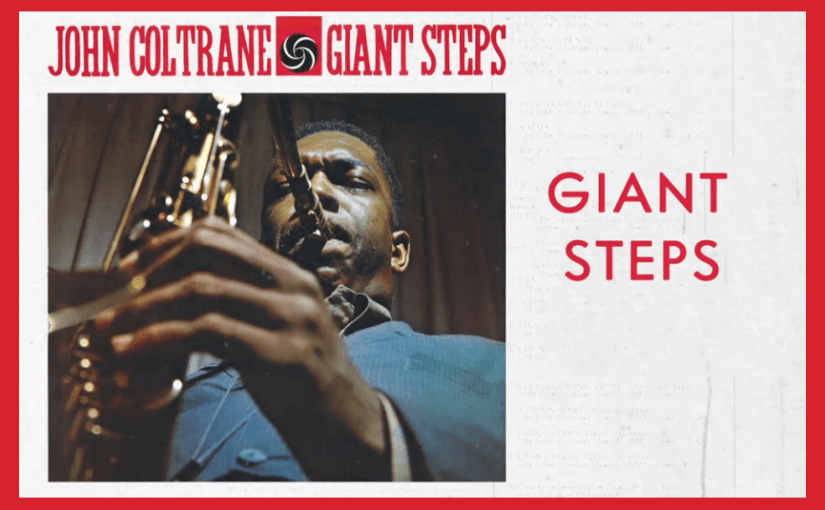
John Coltrane’s Giant Steps

John Coltrane’s masterpiece, Giant Steps, turned sixty in 2020 and this was celebrated with an anniversary deluxe edition LP. Let’s have a brief look at how the album came to life and how Coltrane developed, personally and musically, before being able to compose one of the most influential jazz albums of all time.

John Coltrane went through a lot before he was ready to create his masterpiece Giant Steps. Starting his musical journey in 1949 under the spell of Charlie Parker, and later Dizzy Gillespie, he felt dissatisfied, even dejected. In 1954, Coltrane joined The Miles Davis Quintet where he was encouraged to think more harmonically. This was an important milestone in the yet-to-be-written composition of Giant Steps as he was introduced to new possibilities in chord progressions.

Coltrane had a drug addiction and was dismissed from the band (together with drummer Philly Joe Jones) in 1957. Being sacked by the number one musical influencer, Miles Davis, was a wake-up call. With the help of friends and family, Coltrane took steps to get his life back in order. He started rehearsing with the celebrated Thelonious Monk and this not only helped him recover from his addiction but also helped him develop artistically.

“Working with Monk brought me close to a musical architect of the highest order”

John Coltrane in an interview with DownBeat (1960)

Fully recovered and evolved, Coltrane rejoined Miles Davis’ band in 1958. The following year, they recorded Miles Davis’ Kind of Blue, an album that is claimed to be the most important album in jazz history. Giant Steps was recorded less than a month after the sessions for Kind of Blue (1959). Giant Steps, consisting entirely out of Coltrane’s original compositions, was released in 1960, and despite being a perfect contrast to Kind of Blue, it became a mighty equal.

Working with Thelonious Monk, and recording Kind of Blue with Miles Davis, were both giant steps John Coltrane took before he mastered the skills to compose and record the album that innovated jazz harmonically and rhythmically.

Related articles:

Spotlight on Coltrane: 5 Diverse Albums

John Coltrane started his musical journey in 1949 under the spell of Charlie Parker and later Dizzy Gillespie. In 1954, he joined The Miles Davis Quintet where he was encouraged to think more harmonically. During…

John Coltrane’s Soultrane

The second half of the nineteen-fifties defined John Coltrane’s career and helped him come into prominence as a musician and arranger. Underlined is the time as a member in Miles Davis’ First Great Quintet and…

Thelonious Monk At His Best – Palo Alto

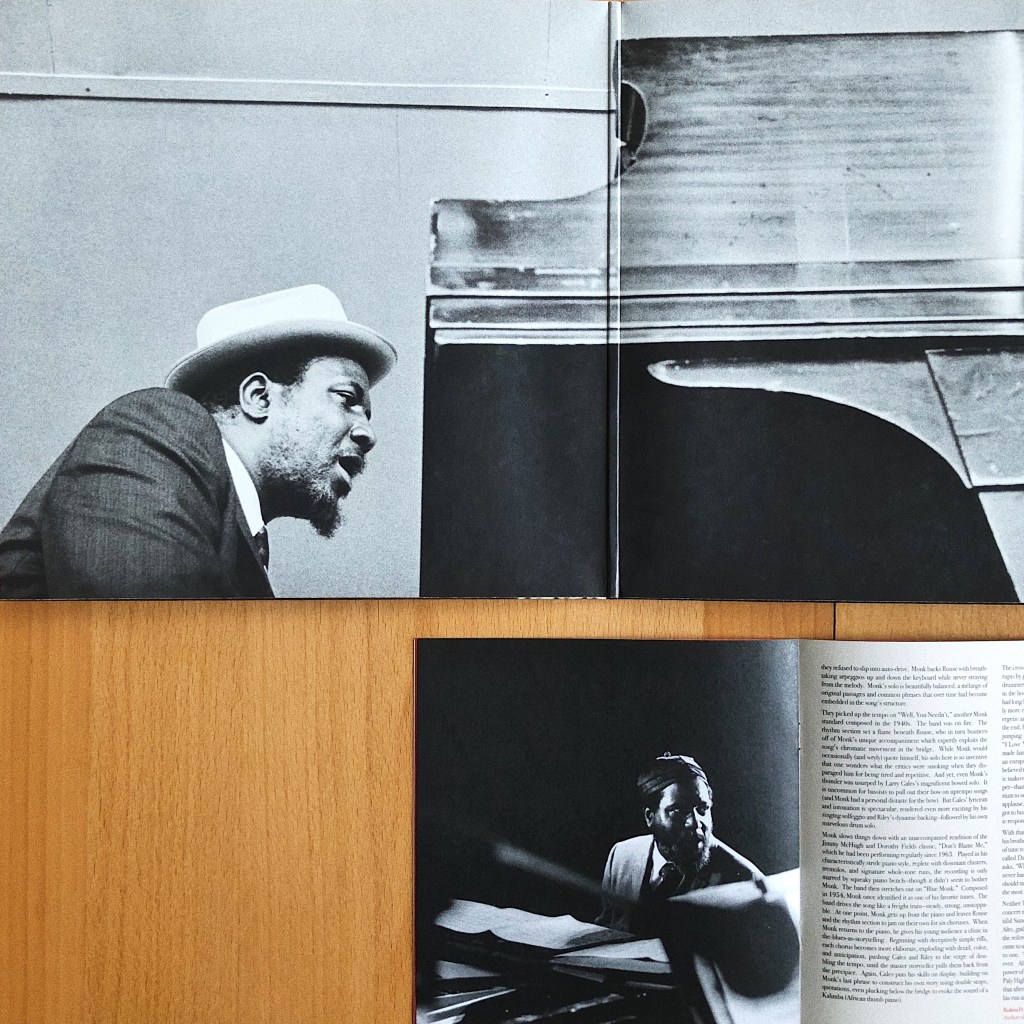
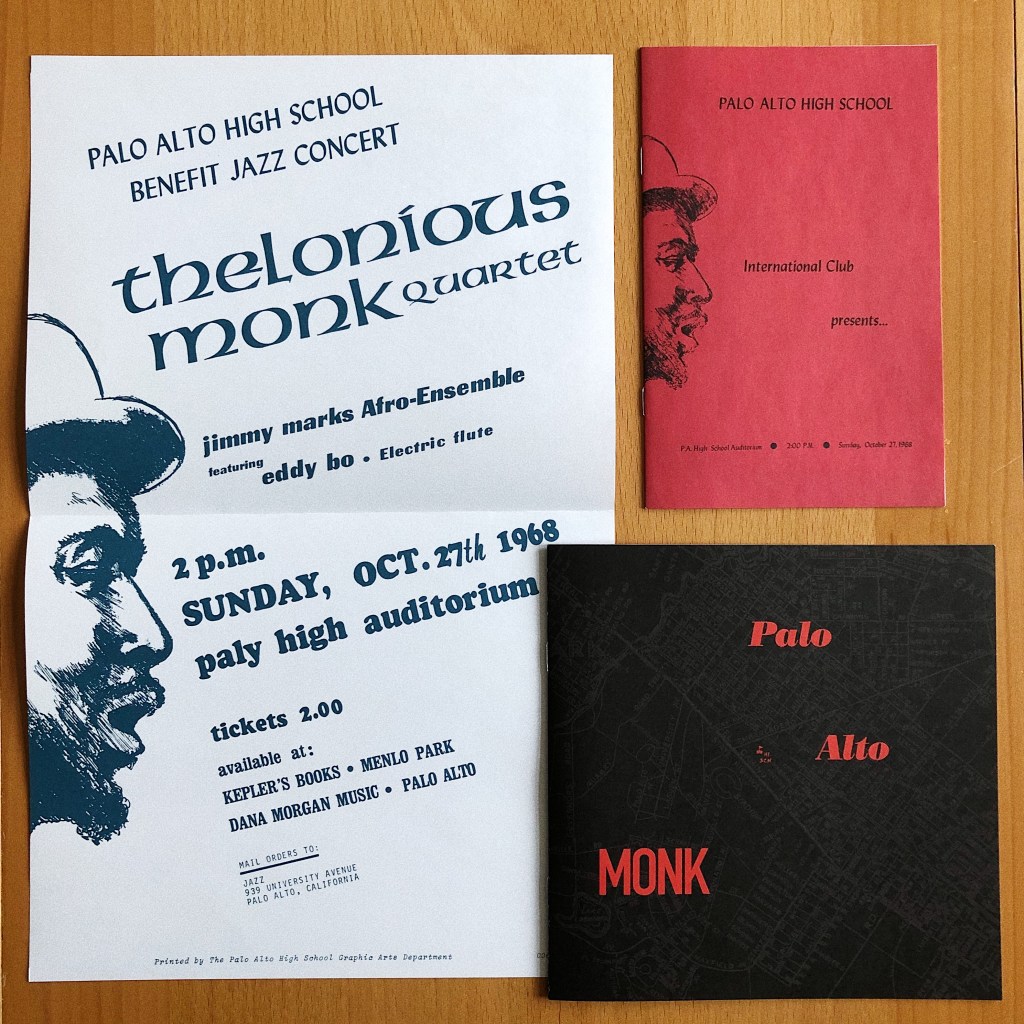
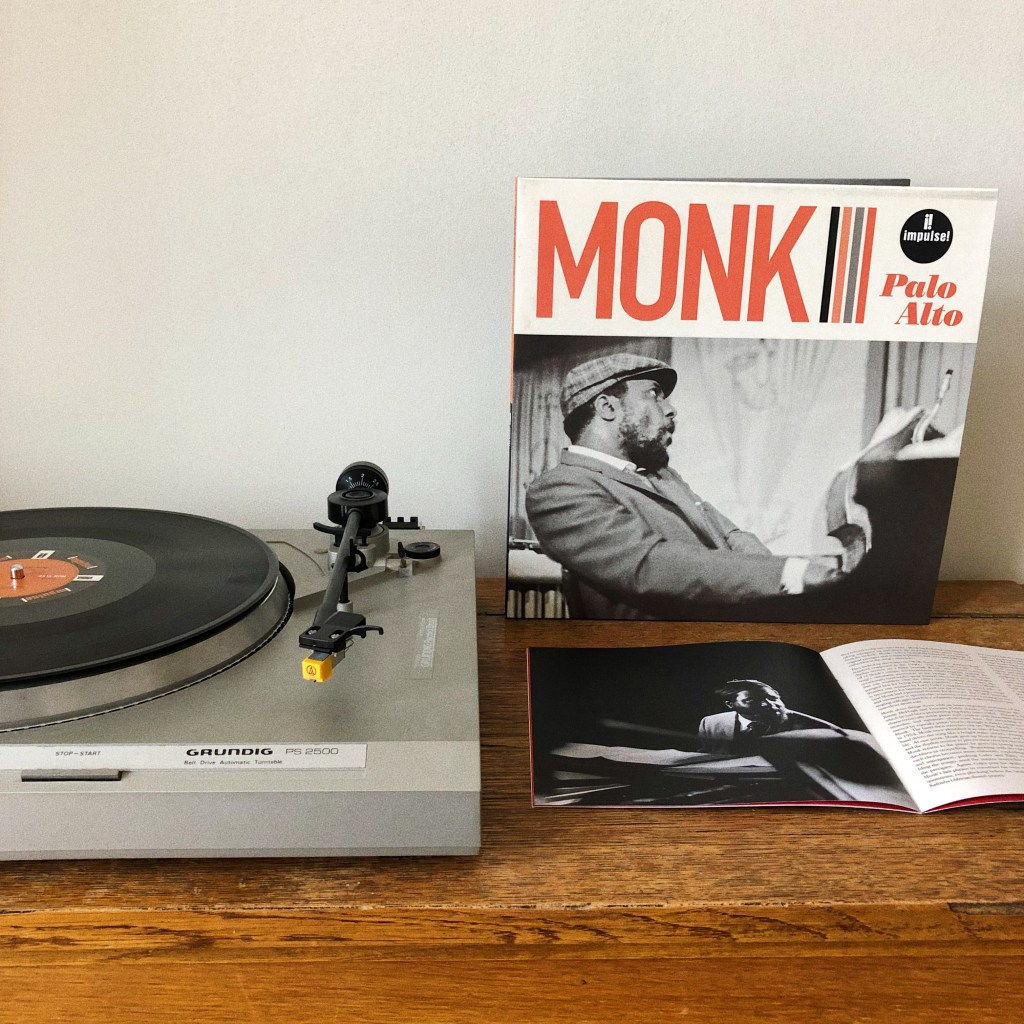
In 1968, the sixteen-year-old Danny Scher invited Thelonious Monk and his quartet to play a benefit concert at his high school in Palo Alto, California. The concert got recorded and now, more than 50 years later, the music was released. Palo Alto is a live recorded concert featuring Charlie Rouse on the tenor saxophone, Larry Gales on the bass, Ben Riley behind the drums, and composer Thelonious Sphere Monk on the piano.

When jazz drummer T.S. Monk was contacted regarding an old concert recording, he was amazed by his father’s performance and the background story behind the session. Danny Scher, sixteen at the time, organized benefit concerts to raise money for the Peace Corps and construction projects in Kenya and Peru. Although many people did not believe it would actually happen, he successfully hosted a concert with the jazz titan, Thelonious Monk.

T.S. Monk, knowing most of his father’s live recordings, understood how unique this recording was and how it contributes to the legacy of Thelonious Monk. In cooperation with the label Impulse Records, he released the album in September 2020.

In an interview with Brad Baker from jazz.fm91, T.S. Monk highlights that his father was mainly known as a live artist. Especially before being placed on the cover of Time Magazine in 1964, and the wider public was introduced to his music, Monk’s recording career was unstable. Unlike Miles Davis or John Coltrane who spent their careers with major labels, Monk didn’t rely on his recordings, the people who remember Monk will refer to his live sessions instead.

T.S. Monk claims that the recording at the Palo Alto high school is the best recording made during his father’s career. “The way he plays, not knowing he was being recorded, was very rare,” he explains.

All of those elements that the world loves about Thelonious Monk are present in this recording.

T.S. Monk (Thelonious Monk’s son)

“Danny Scher caught him on an exceptionally good day, and all of those elements that the world loves about Thelonious Monk are present in this recording”, T.S. Monk said, “his ability to work with time and shift and displace various phrases, the swing that all of his bands always had, the unique harmonics and melodic figures that he played… it’s just all there. It’s pure Monk, and it’s wonderful.

You can listen to the full interview with T.S. Monk here:

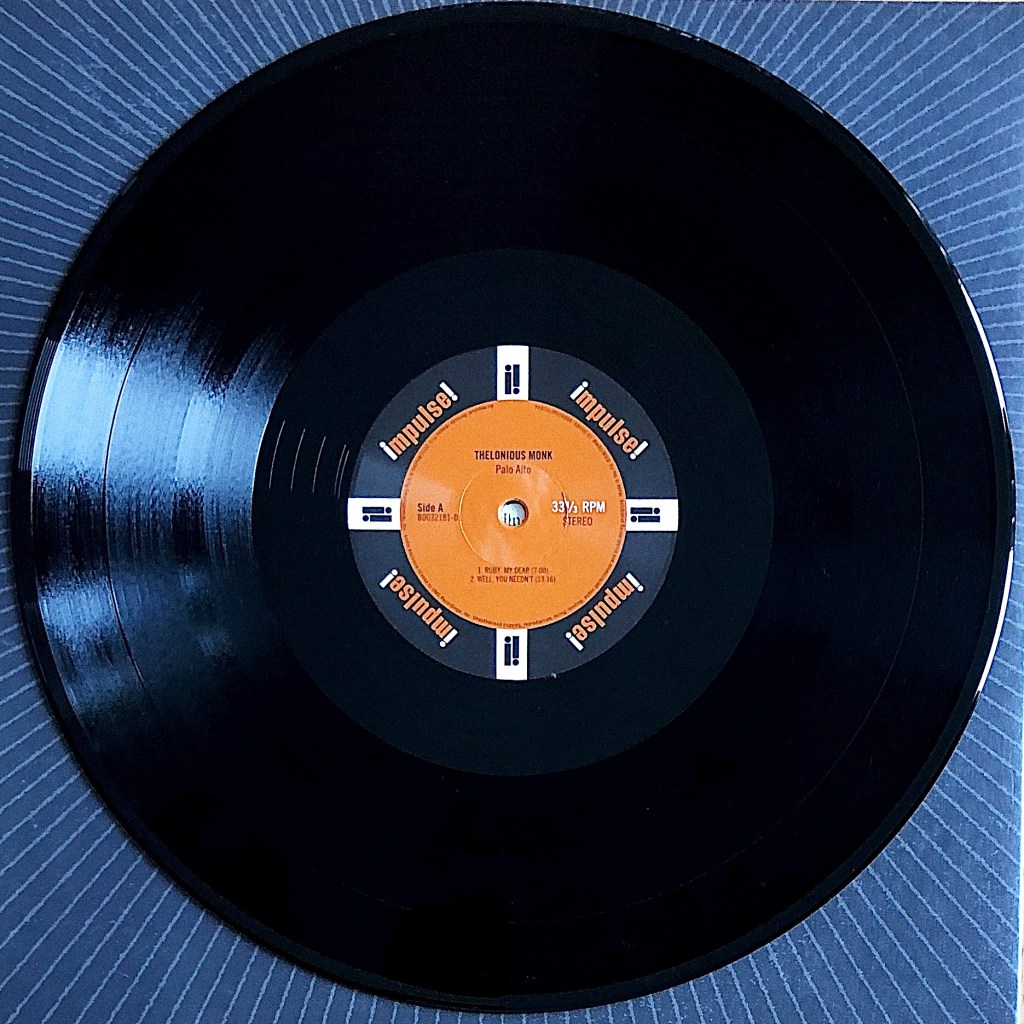
The quality of the recording is exceptionally good for its age, but it has limitations. It does, however, capture astonishing details you rarely receive when listening to a studio recording. During Monk’s original composition “Well, You Needn’t” you can hear Larry Gale singing along during his bass solo. In piano-exclusive parts, you can hear Monk tapping his foot. You hear the audience react to every interaction of the musicians. These minor details bring out the jazz and feeling of presence when listening to this dusty 50-year old recording.

The album on vinyl comes with a gatefold sleeve, a copy of the original program, a replica of the event poster, and a booklet including rare images of Monk and the band.

Hugh Masekela and Tony Allen – Rejoice, Here Comes Tony

Would there be afrobeat without Tony Allen? Tony Allen’s beats and rhythms were, to say it modest, genre-defining. He will always be remembered as the pioneer and co-founder of afrobeat. He was a curious musician and left his mark on various collaborative projects that would shift and blend music genres.

Tony Allen passed away in April 2020, one month after the master drummer released the collaborative work Rejoice. For this project, the Nigerian drummer worked together with South African trumpeter Hugh Masekela. Hugh Masekela, who had a major influence on jazz in South Africa, would add melodies to the drum beats of Tony Allen. The two met in the seventies thanks to their associations with Fela Kuti (Africa ’70).

In the decades to come, they talked about making an album together. In 2010, producer Nick Gold took the opportunity and recorded the encounter. The recording remained unfinished and was stored in the archives. With Hugh Masekela’s passing in 2018, Tony Allen and Nick Gold continued working on the original tapes during the summer of 2019. They finished the recording at the same studio where the original sessions took place, the Livingston Recording Studios in London.

‘Rejoice’ can be seen as the long overdue confluence of two mighty African musical rivers – a union of two free-flowing souls for whom borders, whether physical or stylistic, are things to pass through or ignore completely.

According to Allen, the album deals in “a kind of south African-Nigerian swing-jazz afrobeat stew.”

World Circuit – text featuring on the album’s cover

Robbers, Thugs And Muggers (O’Galajani), the opening song of the album, starts with a vocal intro by Hugh Masekela. Fifteen seconds in, Tony Allen sets the rhythm on the drums and after finishing the vocal intro, Hugh Masekela picks up the drums with melodies on his flugelhorn. The opening track defines the rest of the album, a unique fusion of afrobeat and jazz where drum beats, vocals, and trumpet melodies are fundamental elements.

Tony Allen & Hugh Masekela – The Story of Rejoice (World Circuit Records)

Related articles: